

Acrylic Custom Fabrication Guide
From Material Selection to Finished Product Delivery.
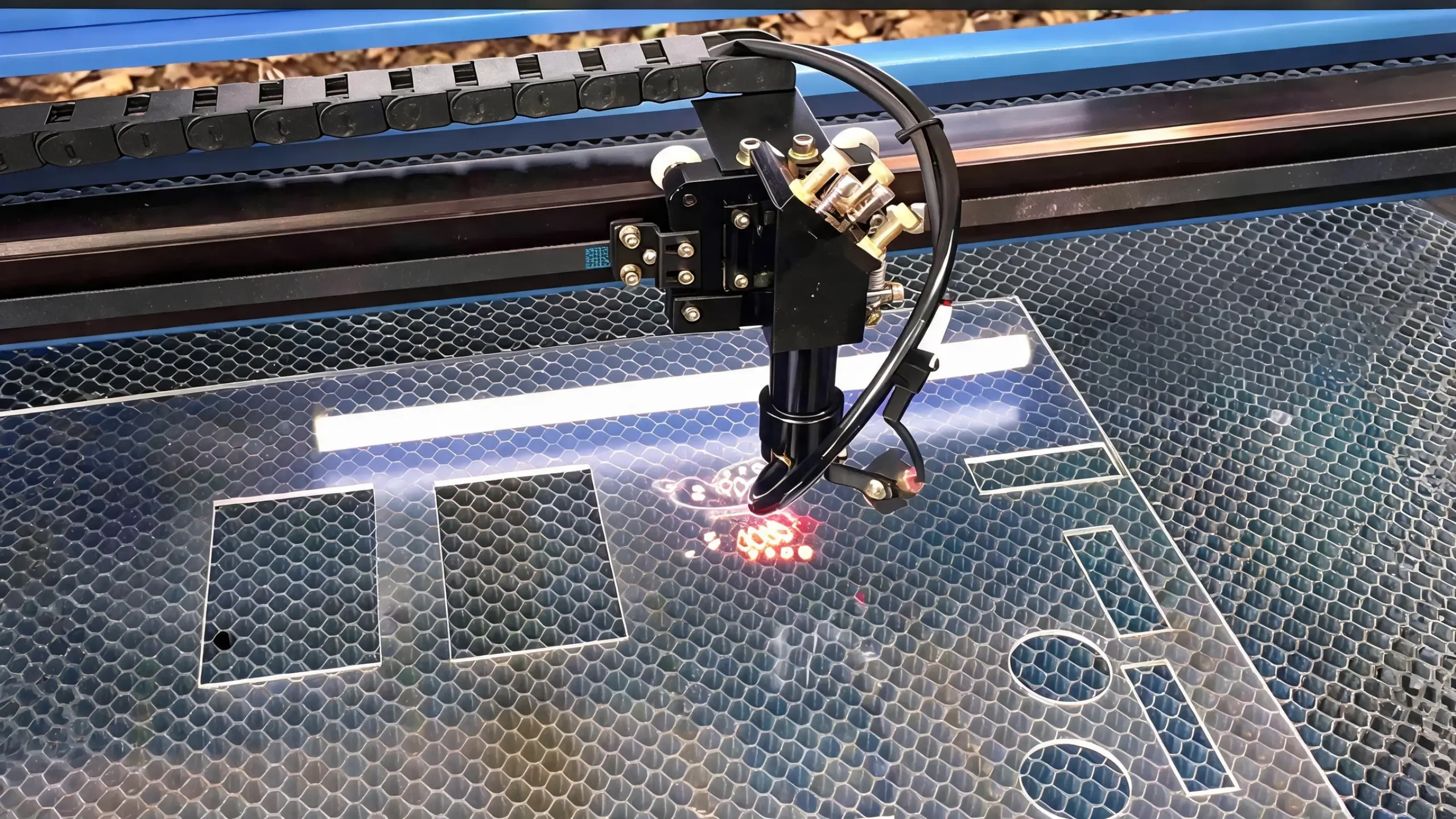
Acrylic Custom Fabrication Guide: From Material Selection to Finished Delivery
Acrylic is widely used in display stands, signage, retail props, decorative ornaments, and equipment covers due to its high light transmission, excellent weather resistance, and processing flexibility. We provide one-stop custom acrylic fabrication services, including laser cutting, diamond polishing, UV printing, hot bending, bonding, and assembly.
This guide fully explains the entire customization process: sheet selection, drawing specifications, process selection, tolerance standards, sampling, and mass production requirements. It helps you clarify project parameters, reduce repeated revisions, and efficiently obtain qualified acrylic finished products.
Understanding Acrylic Sheets: Choosing the Right Material is Half the Battle
Acrylic sheets mainly fall into two major categories. Your choice directly determines the processing effect and cost:
Cast Acrylic Sheet:
High molecular weight, strong hardness, excellent transparency, and low internal stress, resulting in minimal cracking risk during processing. It has high light transmission, stable material, and excellent polishing effects. With fewer bubbles, it is highly suitable for high-end displays, signage, and premium ornaments.
It is typically preferred for projects with high requirements for appearance, thick panels, polished edges, and processing results. Commonly used in high-end display products, advertising signs, awards, transparent display props, and custom processed parts. During laser cutting, cast acrylic provides extremely smooth, clear edges with almost no sanding effect, making it the best choice for laser cutting.
Extruded Acrylic Sheet:
Cost-effective, suitable for projects with moderate budgets that only require simple cutting and printing. It features good flexibility and short softening times, facilitating rapid vacuum forming, making it suitable for mass production of thin sheets. Extruded sheets have smaller thickness tolerances and lower unit cost. It is more suitable for projects requiring high thickness consistency, mass production, and strict cost control, such as lamp covers, protective panels, windows, and frames.
Available Types: Transparent, frosted, black/white, colored; Thickness Range: 1mm–50mm.
Acrylic Sheet Thickness Selection Reference
| Thickness | Application Scenarios |
|---|---|
| 1-2mm | Photo frame backing boards, lightweight small accessories. |
| 3-5mm | Signs, small display racks, bookmarks, A4 information cards. |
| 5mm | The golden thickness for LOGO standing signs. |
| 8-10mm | Medium-sized display racks, larger panels. |
| 15mm and above | Heavy-duty structural components, large-scale signage. |
How to Choose Acrylic Sheet Types & Surface Finishes
If your product requires polished edges that are exposed, or demands extremely high transparency, choose Cast Acrylic. If it involves mass production of standard parts or is a cost-sensitive project, Extruded Acrylic is the more economical choice.
Additionally, acrylic is available in various surface finishes including transparent, colored, frosted, mirror, pearlescent, and textured.
- Transparent Acrylic: Perfect for light boxes and display racks that require a clear, see-through texture.
- Frosted Acrylic: Ideal for scenarios needing soft light effects or fingerprint-resistant surfaces.
- Mirror Acrylic: Provides a reflective effect, is lighter than glass, and is easier to process.
Available Fabrication Processes
- Laser Cutting: Precise cutting of planar shapes with clean, smooth contours.
- Diamond Polishing: Transparent, bright edge treatment that removes cutting burrs.
- UV Printing: Direct color printing on the board surface, waterproof and wear-resistant.
- Hot Bending: Creates special shapes such as folds and arcs.
- Bonding & Assembly: Seamless bonding of acrylic parts to create boxes, frames, and display stands.
- Drilling, Milling, Counter-sinking: Opening holes for installation and fixing.
Tolerance Standards & Production Notes
1. Processing Tolerances
Laser cutting and machining tolerances are ±0.2~0.5mm, varying with product size and sheet thickness. Hot-bent products have slightly larger tolerances due to thermal deformation. For high-precision projects, we will confirm tolerance requirements in advance.
2. Sampling & Mass Production
| Stage | Details |
|---|---|
| Pre-production Sample | Can be produced to confirm appearance, color, and structural functionality. Delivery time depends on product complexity. |
| Mass Production | Starts only after sample confirmation. The production cycle is affected by quantity, process complexity, and scheduling. |
| Pre-shipment Inspection | Before packaging and shipping every batch, we inspect dimensions, appearance, and printing quality. |
Important Notes:
- Avoid wiping UV printed surfaces with strong solvents to prevent pattern damage.
- If you are concerned about sharp corners or safety issues, sharp angles can be changed to rounded corners.
- For outdoor use, it is recommended to use Cast Acrylic for better anti-yellowing performance.
Pitfalls to Avoid
❌ Pitfall 1: Material Thickness "Shrinkage"
An advertised 3mm sheet may actually be only 2.5mm. This is visually imperceptible, but its load-bearing and deformation resistance are significantly reduced. Advice: Specify positive tolerances or designated sheet brands when placing orders.
❌ Pitfall 2: Wrong Design File Format
Sending JPG/PNG files for factory cutting is the most common mistake. Raster images cannot provide accurate cutting paths, resulting in blurry edges. Advice: Always provide vector files like AI/EPS/PDF, and ensure text is converted to curves/outlines.
❌ Pitfall 3: Ignoring Protective Film Issues
Acrylic surfaces usually have a protective film. If laser engraving is needed, make sure to confirm with the factory whether to engrave "before peeling" or "after peeling." Otherwise, residues or scratches may appear on the finished product.
❌ Pitfall 4: Only Looking at Unit Price
Quotes for the same spec can vary by 100%. Low prices often mean the use of recycled materials, thickness reduction, or omitted post-processing steps. Advice: Pay attention to the process details in the quote—whether it includes polishing, chamfering, packaging, etc.
❌ Pitfall 5: Mass Production without Sampling
There is always a gap between design drawings and the actual product. Issues like color differences, tolerances, and structural strength can only be discovered with a physical sample. Advice: Always make 1-3 samples to confirm before any bulk order.
Frequently Asked Questions
1. What effects can UV color printing achieve?
We can print LOGOs, patterns, and gradients directly onto the acrylic surface. The ink has strong adhesion, and small batch customizations are welcome.
2. What products are suitable for hot bending?
We heat the sheets to shape them into curved or cylindrical forms. It is widely used for arc display stands, equipment protective covers, and curved signage.
3. Can you quote for multiple quantity tiers simultaneously?
Yes. Clients can specify different quantities such as 100/250/500 units. We will provide separate quotes for each tier, allowing you to easily determine the best cost point.
4. What is the difference between Cast and Extruded Acrylic? How to choose?
Cast Acrylic: High transparency, scratch-resistant, acid and alkali resistant, ideal for high-quality products, but has larger thickness tolerance. Recommended for laser cutting (no bubbles at the cut edges).
Extruded Acrylic: Produced in high volume with automated lines, uniform internal stress, good for mechanical engraving, but limited color and specification diversity.
5. Which sheet should my project choose?
It depends on your application scenario: Outdoor advertising requires Anti-UV sheets (UV absorber content ≥0.3%). Indoor ornaments focus on surface hardness. LED light boxes should consider light diffusion effects. Protective covers should focus on thickness and strength.
6. Can I sample first?
Absolutely. Paid samples are completely separate from mass production orders. We highly recommend sampling first to confirm the product effect before moving into mass production.
Ready to Customize?
Submit your design project to us.
Drawings / Drafts / Concepts are all welcome. 24-hour quotes, stress-free consultation.