


Acrylic Thermoforming & Bending
Integrated Molding for Curved and 3D Shapes
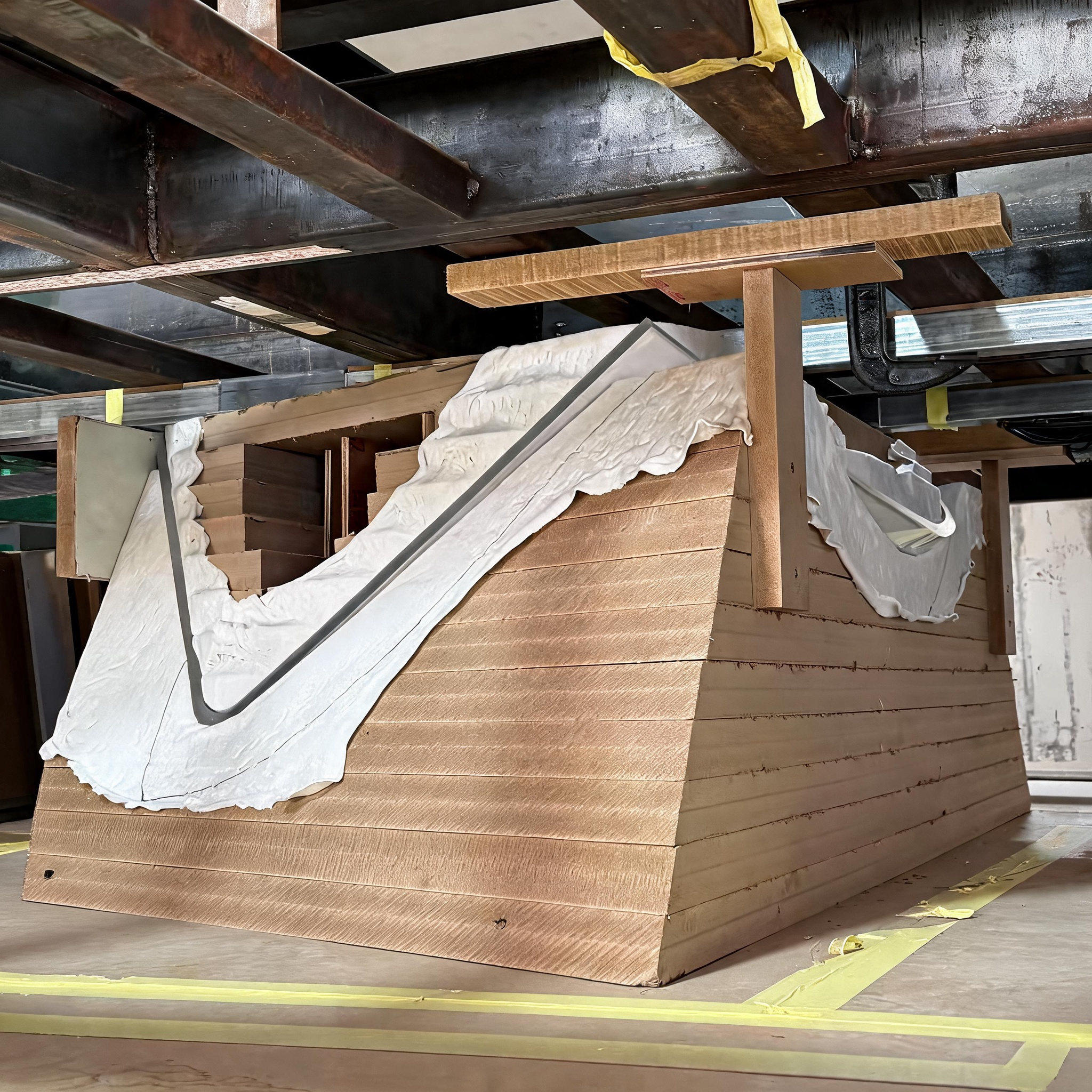
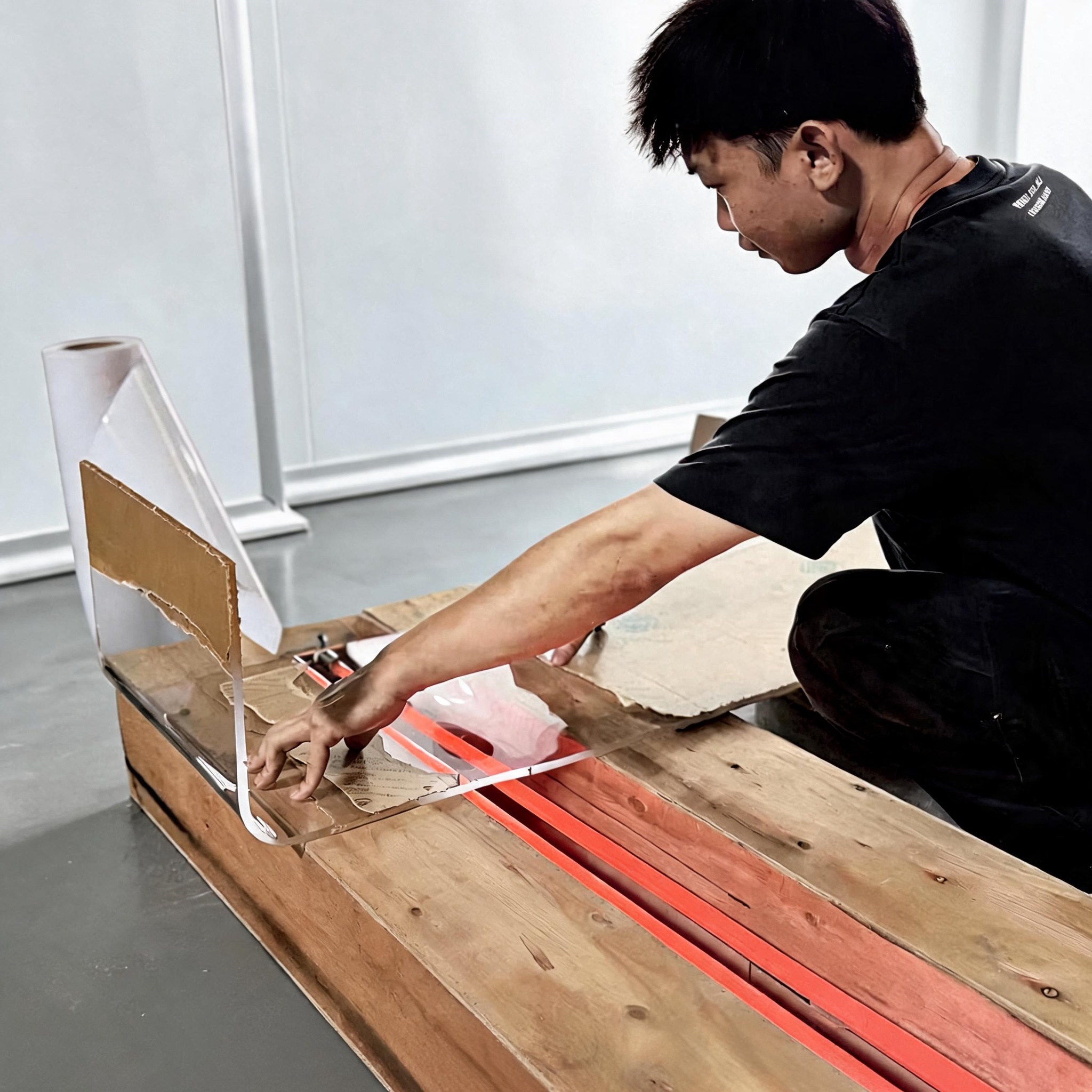
Acrylic thermoforming and bending utilize constant-temperature heating to flexibly shape flat sheets into three-dimensional forms, creating an integrated, seamless structure without the need for bonding. Achieve flawless clear bends with no whitening, consistent angle accuracy, and a smooth, refined finish.
Traditional multi-piece bonding leaves visible seam lines and adhesive marks. For curved or L-shaped acrylic supports, conventional cutting cannot achieve a one-piece design. Many factories struggle with whitening, cracking, or inconsistent angles across batches. Our mature thermoforming process handles right angles, smooth arcs, and continuous multi-angle bending, with precise temperature control to minimize stress, whitening, and cracking.
I. Typical Application Scenarios
- √ Curved display brackets
- √ L-shaped price stands
- √ Curved jewelry trays
- √ Equipment arc protective covers
- √ Curved storage dividers
- √ Multi-tier continuous bending display racks
✅ Core Advantages
- √ 1. Integrated molding, minimizing seam lines.
Eliminates the need for bonding multiple sheets, resulting in a cleaner, more sophisticated appearance free from adhesive residue or visible gaps. - √ 2. Uniform light transmission at the bend, strictly controlled against whitening, cracking, and bubbles.
Our mature temperature-control process prevents opaque layers at the bend, ensuring clear light passage for transparent components and avoiding cheap defects. - √ 3. Supports various shapes: right-angle bends, smooth arcs, and continuous multi-angle bends.
Adaptable to minimalist curved display racks, L-shaped platforms, arc-shaped signs, trays, and covers. - √ 4. Stable dimensions and angles with controlled spring-back; consistent angles across mass production.
Ensures that bulk orders do not result in varying angles, facilitating precise subsequent assembly.
❌ Process Limitations
- ❌ Difficulty increases for extremely thin or thick sheets (thickness limits apply).
- ❌ Sharp 90-degree corners cannot be directly achieved; an arc transition radius must be allowed for the bend.
- ❌ For printed or sandblasted parts, the process sequence must be carefully planned (priority: bending first, then printing/sandblasting).
II. Frequently Asked Questions
Yes, but with shape limitations.
It can achieve arcs, U-shapes, L-shapes, and curved edge wraps, which are conventional shapes. However, sharp right angles cannot be formed by heat bending (thermoforming only supports rounded corners). Extremely small radii, ultra-thin, or ultra-thick sheets are more difficult to process. For complex shapes, we recommend providing a drawing for feasibility assessment.
Minimal with standard processes.
With proper techniques, the finished product remains clear and clean. Minor stretching marks or slight water ripples on the inner curve may appear. The thinner the sheet or the smaller the bending radius, the more visible these marks become. Newly cast acrylic offers better stability and results compared to extruded sheets.
Flexible for samples; suitable for moderate mass production.
Prototyping is flexible and does not require metal molds. For extremely high-volume, single-model production, the continuous thermoforming capacity may be limited. It is highly suitable for multi-style, custom edge-wrapped, and curved display items.